Sourdough English Muffins
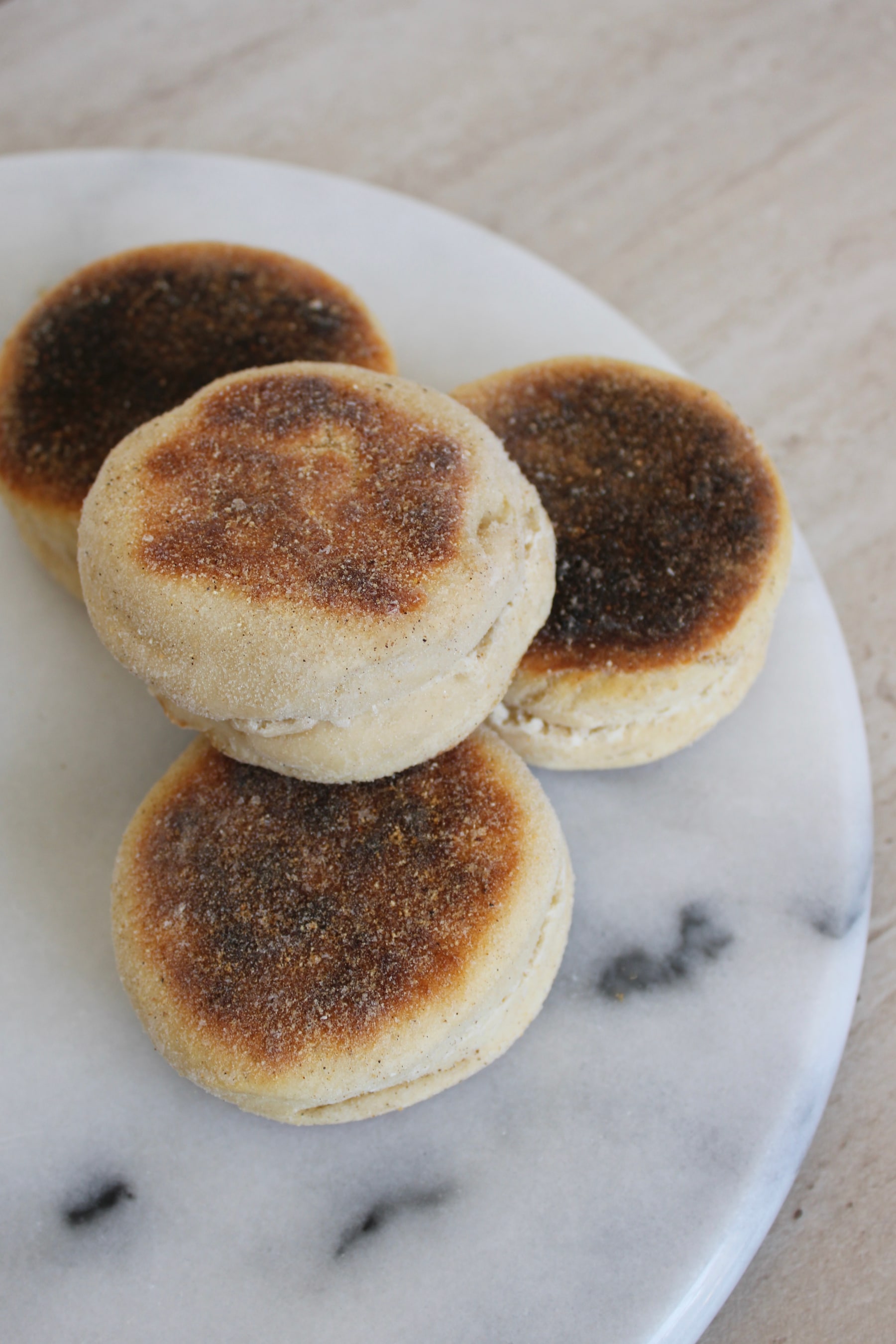
Some things are worth making from scratch, and English muffins are definitely one of them. Once you've had a homemade English muffin, it's hard to go back to the store-bought version. The texture is incredibly soft and fluffy on the inside with those signature nooks and crannies!
The sourdough starter adds a subtle tang and depth of flavor that makes these feel extra special without being overpowering. Combined with the overnight fermentation, the result is an English muffin that's flavorful, tender, and far better than anything I've found at the grocery store.
I love making a big batch and stocking my freezer with them. They're perfect for busy mornings because you can pull one out, toast it straight from frozen, and have a homemade breakfast in minutes. Whether you're making breakfast sandwiches or simply enjoying one with butter, these sourdough English muffins are one of those recipes that prove homemade really is worth the effort.
Sourdough English Muffins
Ingredients
- 150 g active, bubbly sourdough starter
- 240 g warm whole milk (95–100°F)
- 2 tbsp honey
- 70 g unsalted butter, softened
- 10 g fine sea salt
- 300 g bread flour
- 120 g all-purpose flour
- Cornmeal, for dusting
Instructions
Day 1: Make the Dough
- 1
In the bowl of a stand mixer or a large mixing bowl, combine the sourdough starter, warm milk, and honey until mostly smooth.
- 2
Add the butter, salt, bread flour, and all-purpose flour.
- 3
Mix until a shaggy dough forms, then knead: 6–8 minutes in a stand mixer on low speed, or 10–12 minutes by hand.
- 4
The dough should feel soft and slightly tacky but not sticky.
- 5
Place the dough in a lightly greased bowl. Cover and let rise at room temperature until it has increased in size by about 50–75%, approximately 5–8 hours depending on the temperature of your kitchen.
- 6
Cover tightly and refrigerate overnight, or for up to 24 hours.
Day 2: Shape the Muffins
- 1
Line a baking sheet with parchment paper and generously sprinkle with cornmeal.
- 2
Turn the chilled dough onto a lightly floured surface.
- 3
Gently pat or roll the dough to about ¾ inch thick.
- 4
Cut circles using a 3-inch biscuit cutter.
- 5
Place each muffin on the prepared baking sheet and sprinkle additional cornmeal over the tops.
- 6
Gather the scraps into a ball, let rest for 15–20 minutes, then pat out and cut the remaining muffins.
- 7
Cover loosely with a kitchen towel or plastic wrap.
Second Rise
- 1
Let the muffins proof for 3-4 hours, or until noticeably puffy and airy.
- 2
If your kitchen is cool, they may take longer.
- 3
A gently poked muffin should slowly spring back.
Cook
- 1
Heat a cast-iron skillet to approximately 325°F and lightly grease the surface with a neutral oil.
- 2
Cook the muffins for 7–9 minutes per side, adjusting the heat as needed so they brown gradually without burning.
- 3
The internal temperature should reach 195–200°F.
- 4
If the outsides brown before the centers are fully cooked, transfer the muffins to a 325°F oven for 5–10 minutes to finish baking.
Cool
- 1
Transfer the muffins to a wire rack and allow them to cool completely.
- 2
For the classic English muffin texture, split them with a fork rather than slicing with a knife. Insert the fork all the way around the edge, then pull apart to reveal the signature nooks and crannies.
Lauren's Note
- The dough should not fully double before refrigeration. The overnight cold fermentation continues developing flavor and structure.
- For the best texture, avoid rolling the dough too thin. Keeping it about 3/4 inch thick helps create tall, fluffy muffins.
- Fork-splitting instead of slicing preserves the classic English muffin texture.
- Store in an airtight container at room temperature for 3–4 days.
- Freeze for up to 3 months. Slice or fork-split before freezing for easy toasting.
Frequently asked questions
Yes. The dough can stay in the refrigerator for up to 24 hours before shaping.
The second rise may need more time, especially in a cool kitchen. Look for the dough to become noticeably airy and pass the poke test rather than relying strictly on the clock.
Traditional English muffins are cooked on a griddle or skillet, which creates their characteristic crust and texture. While they can be baked, the final result will be different.
Fork-splitting creates the classic nooks and crannies that hold melted butter, jam, and other toppings much better than a clean knife cut.
The easiest way is to use an instant-read thermometer. The center should reach 195–200°F.
Absolutely. Once completely cooled, freeze them for up to 3 months. Splitting them before freezing makes them easy to toast straight from the freezer.